

Quick answer: AI agents for small business are software that answers calls, takes messages, books appointments and routes urgent requests when the owner can’t pick up.
The AI receptionist is the leading example. Telcos, cable operators and unified communications as a service (UCaaS) providers already carry the call, so they can offer one without the setup a standalone app needs.
For a decade, the industry has predicted the end of the phone call. Customers haven’t listened. In Invoca’s 2025 survey of 1,000 US and UK consumers, 44% said they prefer calling a business when they need help, up from 32% in 2022.
For your small business customers, that’s as much a problem as an opportunity. A plumber on a job, a dentist with a patient or a salon owner mid-appointment can’t always pick up. Every missed call is a customer who may not try again. That’s exactly the gap an AI receptionist for small business is designed to close.
That’s why AI agents for small business have moved quickly from novelty to a serious product category, with the AI receptionist leading the way. Most of the market treats it as an app that small businesses buy and set up themselves.
But the company best placed to offer one may be the one already carrying the call: the telco, cable operator or UCaaS provider that owns the line.
As a Hostopia partner, you already own the line, the relationship and the bill. This article explains what AI agents for small business do, how the major operators are already moving and why the provider that owns the line is well placed to deliver an AI receptionist small businesses will actually use.

What AI agents for small business actually do
An AI agent is software that completes a task on someone’s behalf, not just answers a question. Many small businesses already use AI to write marketing copy and reply to customers, but adoption beyond those basics still lags. Voice is where that gap costs the most, because an unanswered call is a lost booking the owner never sees.
On the phone, AI agents for small business typically handle four jobs:
- Answering: Picks up when the owner can’t, including after hours and during busy periods.
- Taking messages: Captures who called, why and how to reach them. It also sends the owner a summary.
- Booking: Checks a calendar and schedules an appointment while the caller is still on the line.
- Routing: Recognizes an urgent request and passes the call to a person.
An AI receptionist for small business bundles these jobs into one service. For you as an operator, the question isn’t whether small businesses want one. It’s who delivers it, and that’s where operators have a natural edge.
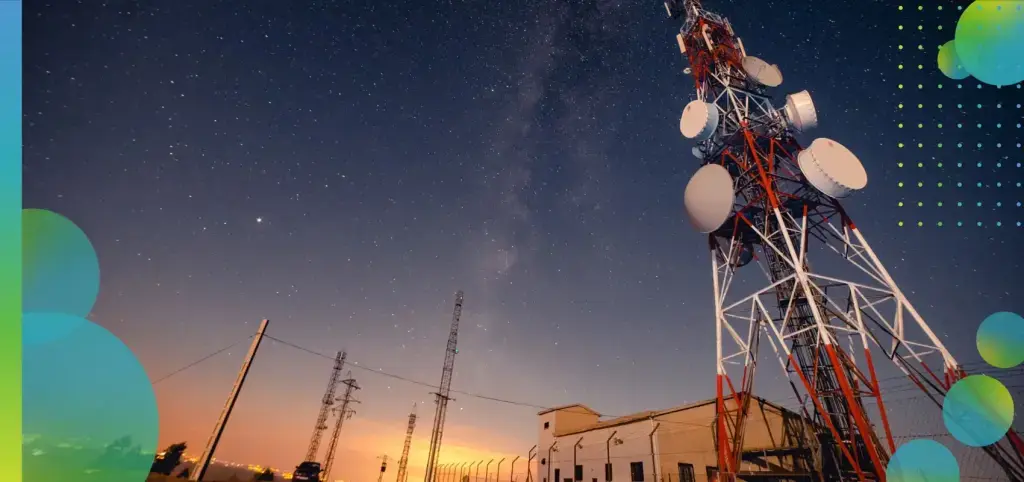
The big operators are already moving
The shift is happening quickly, and it’s coming from the companies that run voice networks, not only from software startups. Large carriers and UCaaS providers are now testing, announcing and selling AI voice products.
Recent launches to watch:
- RingCentral: Made its AI receptionist generally available in June 2025 for $39 per license, a clear sign that AI receptionists for small businesses have become mainstream.
- AT&T: Began testing a network-based digital receptionist for call screening in September 2025.
- Deutsche Telekom: Unveiled a network-based AI call assistant at Mobile World Congress (MWC) in March 2026. Its Voice AI Notes Mobile service, which summarizes business calls, launched on October 5, 2026, for Small and Midsize Business (SMB) mobile plans.
- Vodafone Business: Announced an AI Concierge, built with Google Cloud, in April 2026. It answers inquiries and books appointments for small businesses in Germany and Greece, working much like an AI receptionist for small business.
These launches differ in scope, but the direction is the same: AI voice agents for telcos are moving into the network itself. It’s a familiar pattern. In hosting, providers are building AI into the services customers already pay for rather than leaving them to find separate tools.
Hostopia’s AI-Powered Website Builder, Search Engine Assist and Announcer Pro follow the same approach. They give partners AI-Powered tools they can package under their own brand.

Three advantages you have over a standalone AI agent app
Standalone apps that sell an AI receptionist for small business work, but they leave the setup to the owner: forwarding numbers, connecting a calendar, writing greetings and testing the flow. For a five-person business, that’s often where adoption stalls. As an operator, you can remove most of that work.
Key advantages to highlight:
- You’re already in the call path: Your customers don’t need to forward calls to a third-party number or install anything. The agent can sit where the call already lands, removing the biggest setup hurdle.
- You already have the relationship and the bill: Small businesses buy their phone line from someone they know. Adding a voice AI agent to an existing plan is simpler than evaluating a new vendor, and it fits naturally into a bundle.
- You already have the trust: Callers expect a business line to be reliable and secure. Apply the same standards to AI voice agents for telcos, and you start with credibility a new app has to earn.

Trust and regulation come with the territory
AI voice agents for telcos bring real obligations, and as an operator, you’ll be held to a higher standard than startups.
Key rules to plan for:
- Outbound calls: In February 2024, the Federal Communications Commission (FCC) ruled that AI-Generated voices count as artificial under the Telephone Consumer Protection Act (TCPA), so robocalls using them need prior consent.
- Recording and transcripts: US federal law requires one party’s consent, but several states, including California, Florida and Pennsylvania, require all parties to agree. That matters for any agent that records or transcribes calls.
- Disclosure: In the EU, the AI Act’s rule that people must be told when they’re talking to an AI took effect on August 2, 2026.
Customers care about a human fallback, too. In the same Invoca survey, 77% said they’d be more willing to use AI if a human was still available. Any AI receptionist for small business should know when to hand over.
Position these rules as a reason to offer the service, not to avoid it. Compliance is a built-in advantage: with compliance teams and consent processes already in place, you can absorb obligations a small business owner would struggle to track alone.
How to launch an AI receptionist without overreaching
To keep your rollout manageable and the value clear, follow these principles:
- Start with the simplest jobs: Answering after-hours calls, taking messages and booking appointments deliver value with low risk.
- Connect to the tools customers already use: Booking only works if the agent can see the calendars and scheduling apps your small business customers rely on.
- Make the handoff obvious: Callers should always be able to reach a person or leave a message.
- Be transparent: Tell callers they’re speaking to an AI, and tell your business customers how call data is stored and used.
- Price it into the plan: An AI receptionist for small business sold as part of a business bundle is easier to adopt than a separate subscription.
- Measure what the customer cares about: Calls answered, appointments booked and messages delivered are the numbers that keep a small business subscribed.
Learn how we can help your business by looking at our product guide.
Answer the call before an app does
Small businesses don’t want another app to manage. They want their calls answered. As AI agents for small business become an everyday expectation, operators that already carry those calls have a head start, if they move with the same care for reliability and trust they apply to the network itself. Hostopia helps partners bring AI into the services their customers already buy.
Ready to Bring AI Into the Services Your Customers Already Buy?
Talk to the Hostopia partner team at 1-800-322-9438 to see how AI fits into the services you already sell.
Frequently asked questions about AI agents for small business
Won’t an AI receptionist frustrate callers who want a real person?
Not if it knows when to hand over. Callers should always be able to reach a person. In Invoca’s survey, 77% were more open to AI with a human available.
What can an AI receptionist handle for a small business?
It covers four core jobs, the same ones that make AI agents for small business worth adopting. It answers calls when the owner can’t pick up. It takes messages and sends the owner a summary. It books appointments and routes urgent calls to a person.
Do we need to tell callers they’re speaking to an AI?
Yes. Transparency builds trust with callers and business customers. In the EU, the AI Act requires this disclosure. The rule took effect on August 2, 2026. Also, tell customers how call data is stored and used.
Should an AI receptionist be sold as a separate product?
No. Price it into the business plan instead. A bundled voice agent is easier to adopt than a separate subscription. Small businesses already buy their phone line from you. Adding a voice agent is simpler than evaluating a new vendor. Bundling is one of the biggest advantages of AI voice agents for telcos.
