

The 2026 FIFA World Cup brought 48 teams, 104 matches, and millions of fans to host cities across Canada, the United States, and Mexico. For small businesses in those cities, it was supposed to be a once-in-a-generation opportunity — a surge of foot traffic, international visitors, and consumer spending that would lift every boat.
The reality was more complicated. And for service providers, it tells you something important.

The gap between expectation and outcome
In the months before the tournament, optimism ran high. Early surveys suggested most small businesses in host cities expected a positive impact, with many anticipating revenue increases of 20% or more.
Then the closer-in research landed.
According to the Canadian Federation of Independent Business (CFIB), 72% of small businesses in Canadian host cities expected the tournament to have no impact on their revenue at all. Separate research from Merchant Growth, drawing on an Angus Reid survey of over 1,500 Canadians, found that 58% of small business owners expected the World Cup to have no meaningful effect on their revenue compared to a typical summer.
Some businesses didn’t just miss the opportunity — they lost ground. In some U.S. host cities, businesses away from official fan zones reported revenue pressure as road closures and concentrated crowds pulled foot traffic toward official venues and away from neighbourhood businesses.
The opportunity was real. The gap between who captured it and who didn’t was equally real.

What separated the winners from the rest
A bar next to a fan zone could record its busiest week ever. A retailer two blocks away, cut off by road closures, could watch its regular customers disappear. Location played a role — but it wasn’t the whole story.
The businesses that converted the World Cup moment into real revenue shared a few common traits: they planned early, controlled their costs, and critically, they had a digital presence that let fans find them before making decisions about where to spend.
Here’s the part that should matter to every service provider reading this: according to NetChoice, 1 in 5 Canadians planned to watch World Cup matches at a locally or independently owned business — making them 11 times more likely to choose local over a national chain. Consumer intent was firmly on the side of small business.
But intent doesn’t translate into sales if the business can’t be found online. If an SMB doesn’t have a website, an active social presence, or an online store, that consumer goodwill has nowhere to land. The fan searching for a local spot to watch the match will find the one that shows up — not the one that doesn’t.
SMB digital readiness was the dividing line.
The lesson for service providers
The World Cup compressed something that’s always true into a very visible, very measurable window: digital presence determines who captures opportunity and who watches it pass.
This isn’t a lesson about football. It’s a lesson about what happens every day in your SMB customers’ businesses — every time a consumer searches for a local service, every time someone looks up a restaurant before choosing where to go, every time a small retailer loses a sale to a competitor who happened to be easier to find online.
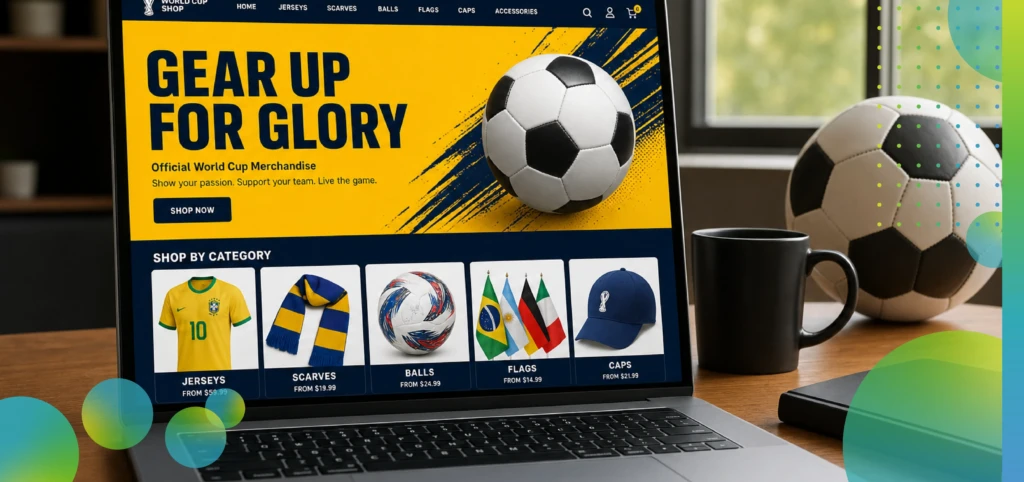
The businesses that were digitally ready — with a website, an online store, a social presence, and the ability to run a promotion — had somewhere to direct all that consumer goodwill. The ones that weren’t had no way to catch it.

For service providers, that gap is both a problem and an opportunity. Your SMB customers are not going to solve their digital readiness problem on their own. They don’t have the time, the technical confidence, or the resources to build a digital stack from scratch. But they will stay with the partner who solves it for them.
What digital readiness actually looks like
SMB digital readiness isn’t about having every tool. It’s about having the right foundation:
A professional web presence — so they show up when customers search, and make a good impression when they arrive.
The ability to sell online — so revenue isn’t limited to whoever walks through the door. During the World Cup, SMBs with online stores could capture orders from fans who never made it to the physical location.
Basic digital marketing — so they can run a promotion, reach a local audience, and stay visible between the big moments.
A platform that’s easy to manage — because a small business owner running a restaurant or a retail shop doesn’t have bandwidth to wrestle with complicated software during a busy tournament week.
This is exactly what service providers who partner with Hostopia can offer their SMB customers — a branded, turnkey digital stack that covers web presence, ecommerce, and digital marketing under one roof. No technical build required. No months-long implementation. Just a ready-to-go platform your customers can actually use.

The next big moment is already coming
The World Cup is winding down. But the lesson it leaves behind is permanent.
Major events, seasonal surges, viral moments — these are all versions of the same test: when opportunity arrives, is your SMB customer ready to capture it? Do they have the digital foundation to turn consumer intent into revenue?
The service providers who help their SMB customers get digitally ready before the next moment — not during it, not after — are the ones who build relationships that last. Every digital service you add to your bundle is another layer of readiness for your customers. And another reason for them to stay.
Behind every small business that captured the World Cup moment was a platform, a tool, or a partner that made it possible.
Ready to give your SMB customers the digital foundation they need for the next big moment? See how Hostopia’s white-label offering can help.
Sources: Canadian Federation of Independent Business (CFIB), June 2026; Merchant Growth / Angus Reid Survey, June 2026; NetChoice, “How Small Businesses Use the World Cup to Compete Like Big Brands,” June 2026; Journey Capital, “How the World Cup Creates Opportunities for Small Businesses,” June 2026; Augusta Free Press, “How the 2026 World Cup Affected Local Businesses in Host Cities.”
